


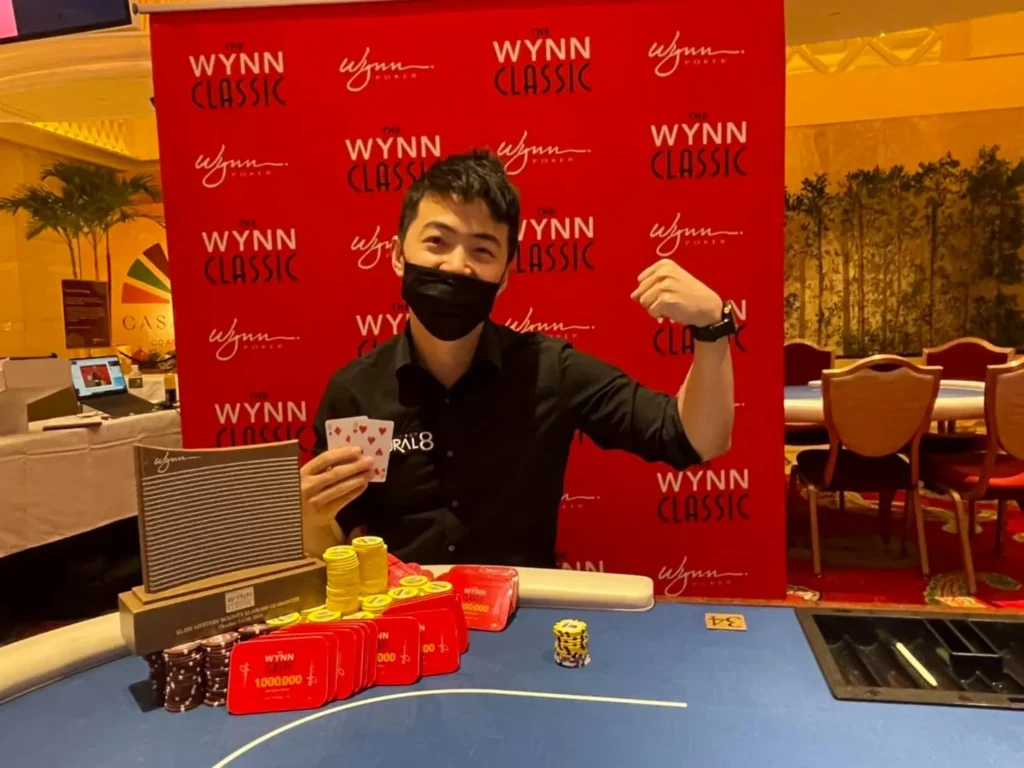
Welcome to another exciting edition of our player spotlight series. Today, we have the privilege of sitting down with a luminary in the live poker world, a maestro of the felt who has left an indelible mark on the game. Meet Pete Chen, the prodigious talent who clinched not one, but two coveted bracelets at the World Series of Poker (WSOP) in consecutive years, 2021 and 2022. From his early days in poker to his rise to the zenith of the game, Pete’s journey is a testament to skill, perseverance, and unyielding passion. Let’s delve into his story, strategies, and the moments that defined his illustrious career.
How did you first get involved with poker?
I was first introduced to poker by my friends. I had often seen poker being played in movies, and it was only when my friends talked about it that I understood what the game in the movies actually was. I then looked it up online and found a platform called Pokerstars, where I played my first game online.

How long have you been playing poker professionally?
10 years. If we’re talking about fully committing to poker and treating it as a profession, this year marks my tenth year.
Can you recall your very first poker win? How did it feel?
What I remember is two tournaments in 2013. One was the Red Dragon Cup, where I can’t recall my exact rank, but the prize was around 400,000 Hong Kong dollars. Later that year, I won the main event at APT, which brought me 570,000 Hong Kong dollars. Both prizes were significant sums for me at the time. I was thrilled, but it didn’t bring any significant changes to my life as I had already planned out my poker life bankroll.
How many tournaments have you participated in throughout your career?
If we estimate based on my record, assuming a 20% cash, I have around 500-600 cashes, which means I’ve probably played in 2500-3000 tournaments.
Do you have any major titles or championships under your belt?
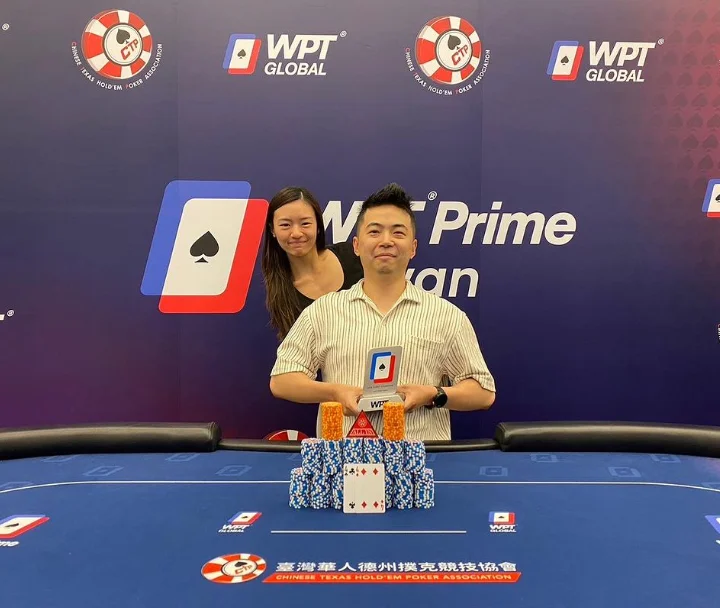
I would say the most significant is the WPT main event in Beijing in 2017. Before that, I had never won a prize as large.

What would you consider to be your biggest accomplishment in poker so far?
I believe the most significant accomplishment is learning to view things from different perspectives and applying it to life. Before poker, I used to play paintball with friends. When you feel like you’re putting in more effort than your teammates, it can be disheartening. But poker is different; it’s a solitary game where the outcome relies solely on you.
I am currently running a company and can better appreciate the difference between individual success and team success. Achieving success as a team is definitely more challenging, but from past experience, I’ve learned that I must first excel individually because if I can’t get the first step right, the team can’t possibly succeed.
I also feel a noticeable difference in the level of joy when the team achieves something compared to when I achieve something individually. The emotional impact of a team’s success is something you don’t get in individual competitions.
Can you recall a specific hand or moment in a game that was particularly memorable for you?
In both this year and last year’s WSOP Flip & GO events, I bought in ten times to advance and ended up in the exact same position both years.

How do you handle the emotional ups and downs that come with the game?
Even though I’ve participated in so many competitions, anyone normal would feel pressure regarding the contests. However, through practice and the experience of multiple tournaments, I’ve become aware of my emotional reactions in the moment and can control them better.
Furthermore, I keep myself busy. As long as I don’t have any free time, I won’t dwell on the past. I believe that what’s done is done. However, if I made a mistake during a game, I make sure to note it down and correct it. That’s the most important thing. But if something has no relevance to my life and is just an emotional memory, then it’s best left in the past.
How much do you attribute your success to skill versus luck?
I believe you have to look at things in the long term. Whether it’s running a business or playing poker, you may face rough patches, but that’s not the point. The point is the effort you put in, which is the true measure of potential success. “For me, this is especially true in poker. You can’t simply judge a player’s success by a single game’s outcome. The key is whether or not they possess the skills. If someone lacks skills and relies purely on luck, they will eventually meet their end, and that end is losing all their money.
How does one acquire the skills to succeed? For me, it’s a continuous process of reading and learning, or seeking advice from those with more experience. This way, I can constantly enhance my skills towards success. The more skills you master, the quicker and easier it becomes to reach your desired direction. I genuinely don’t believe in luck. After all, up to now, I’ve never drawn a grand prize in Mystery Bounty, not even one of the top three prizes. How can I expect to be lucky with such a record?
What advice would you give to someone who’s just starting out in poker?
It’s important to first clarify what you want before you start learning. Do you want to be a player who can beat your friends? Or aspire to be among the top players in Taiwan? Perhaps you dream of competing abroad, like many professional poker players, waking up in different countries, playing poker when you want, and traveling the world. Depending on your goals, the learning process will vary. It’s crucial to understand your desired direction and outcome to plan your learning path.
What are some common mistakes you see new players making?
One of the most frequent issues is pre-flop range: deciding whether to play a hand, how to play it, and understanding the differences in various scenarios. Poker is complex and, to be honest, I’m still learning. It’s natural and reasonable for beginners to make mistakes, but the key is to learn from these mistakes.
What resources, books, or mentors have been instrumental in your poker education?
I can’t pinpoint a particular book, but when I began learning, I explored numerous foreign books. Being Asian, poker seemed like a game for foreigners. Given today’s perspective, the books I read may be outdated, but back then, I sought cost-effective learning resources. Regardless of the accuracy of the information, having some knowledge is always better than none.
How has poker taught you about life and decision-making?
Poker has taught me a lot. Everyone can play a good hand, but the difference lies in how you handle a weak hand. This mirrors life; when luck is on your side, everything goes smoothly, but challenges arise. A skilled player or a resilient person will persist even during tough times, focusing on what they can control. I’ve learned not to be overly attached to outcomes and not to dwell too much on factors beyond my control, like luck.
What’s the most challenging aspect of being a professional poker player?
Poker comes with many setbacks and negative aspects that can hinder growth. Statistically, few people succeed. Poker tournaments are usually held in casinos, and I’ve seen players win at the table only to lose everything downstairs. I think poker is very similar to entrepreneurship: a high risk of failure, but the rewards for the few who succeed are substantial.
How do you balance your personal life with the demands of a poker career?
I don’t believe I’ve achieved a balance between personal life and poker. World-renowned entrepreneurs rarely have work-life balance, but one thing I strive for is being present in the moment. While I might not get much leisure time, it’s crucial to fully disconnect from work during these periods. I don’t believe I deserve balance for now, especially when I see more dedicated and successful individuals without it.
What are your goals for the future in poker? Do you see yourself branching into other areas or sticking with the game?
Currently, my primary focus is on poker education. Anything related to poker interests me, even if I’ve never tried it or am unsure if I’ll like it. Through teaching, I get feedback on how to improve. I believe that as long as I focus on the right things, improvement will come naturally. My future endeavors will likely revolve around poker as well; I don’t see myself venturing into unrelated fields.
Pete’s Socials:
Instagram:https://www.instagram.com/petepokerworld/
Facebook:https://www.facebook.com/petepokerworld/
Youtube:https://www.youtube.com/@petespokerworld
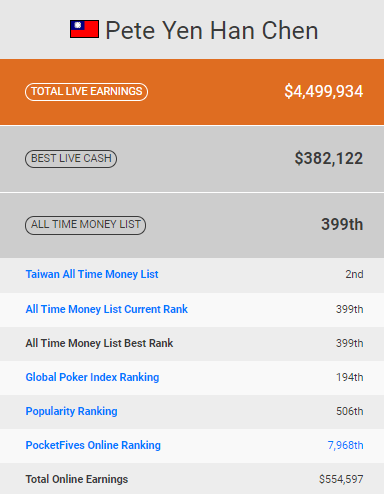
As we wrap up this illuminating conversation with Pete Chen, it’s evident that behind those two gleaming WSOP bracelets lies a story of relentless determination, strategic prowess, and a genuine love for the game. Pete’s journey, dotted with highs, lows, and invaluable lessons, serves as an inspiration for aspiring poker players worldwide. His insights into the world of live poker not only reflect his expertise but also his profound respect for the game. We’re eager to see where the next chapter takes this remarkable player, and if his track record is any indication, the future is nothing short of promising.
Thank you, Pete, for sharing your story with us, and to our readers – keep those cards close and your aspirations closer. Until next time!