


Welcome to another exciting segment of our poker interview series. Today, we’re delighted to be joined by someone who’s both a seasoned player and a familiar name in the poker community. While her birth name is Chien Chih Weng, most enthusiasts and pros in the poker world affectionately recognize her as Maggie. Maggie’s journey into the world of poker began with casual home games during her high school days, but by 2020, she had shifted her focus to the competitive arena of tournaments. Beyond the cards and chips, Maggie also delves into another role in the industry.
How did you first get introduced to poker, and what drew you to the game?
I got started when some friends in my high school debate club were playing it. At first, it was just about hanging out and having fun; I barely knew the rules. But the competitive thrill and sense of achievement I got from tournaments hooked me in.

Does your family support your poker career? How did they react when you first pursued it professionally?
My family’s pretty traditional—dad’s a doctor, mom’s a teacher. But they’re super supportive and open-minded. They even joke around, saying stuff like, “Is our daughter becoming a poker queen or what?”
What was your biggest tournament win, and how did it impact your career and life?
I’d say the Wynn Ladies Event in 2021. That was my first international gig. My highest winnings before that were maybe around a hundred grand in Taiwan dollars. That event landed me $16,000 and it kinda changed the way I look at poker—as a legit way to make money. Additionally, this March, I broke my personal best again at the WPT Cambodia stop, winning $50,000 USD.

Have you noticed any differences in playing styles between male and female opponents?
I feel like some opponents assume that women play more conservatively, and sometimes I even fall into that stereotype. But with the internet, you can look up players’ track records during the game, which helps break these gender biases.
How do you balance your personal life with the demanding schedule of live poker tournaments?
Honestly, it’s hard to strike a balance. Most of my time goes into tournaments. But I’ve set some rules for myself—like spending a set number of hours on poker and work. The non-negotiable for me is 8
hours of sleep.

Traveling is integral to a poker player’s career. How many countries have you played in?
I’ve played in Taiwan, France, Cambodia, the Czech Republic, the United States, Spain, Korea, the Philippines, and Malaysia—so nine countries in total.
Can you share a unique or unexpected story from your poker travels?
A few years back, I met this girl in the U.S. who always had a husky with her—Jessica Vierling. We even bought a microwave to cook in our hotel room and left it at her place when we left. She still sends me
pictures of that microwave in her closet!

How do different cultures and poker atmospheres influence your gameplay strategy?
Different cultures and poker atmospheres don’t have a significant impact on my gameplay strategy. For example, in South Korea, only people with non-Korean passports are allowed to enter casinos, meaning
that most local recreational players are absent from tournaments. However, my strategy doesn’t really differ based on this; I still focus on playing each hand to the best of my ability.
What’s the most valuable lesson or insight that poker has given you about yourself?
There was this one match where I was in a heads-up pot where the other player went all-in. Due to the rules, he had to reveal his cards first and claimed he had a straight. I didn’t look at his cards carefully and, believing him, mucked my own hand and left the table. Only later did I realize that he couldn’t have had a straight, and I likely won that hand. This taught me a valuable life lesson: acting impulsively because of emotions can lead to lost opportunities that are rightfully yours. A0fter that, I locked myself in the restroom and cried.
Lastly, what advice would you give to aspiring poker players looking to enter the professional circuit?
Check your emotional balance first. Some people feel nothing when they win a hundred bucks but get super mad when they lose the same amount. If you can’t handle the emotional ups and downs, this might not be the job for you. And never stop learning, whether it’s bankroll management or risk assessment. Even now, I wouldn’t say I’m a “pro,” I’m always learning.
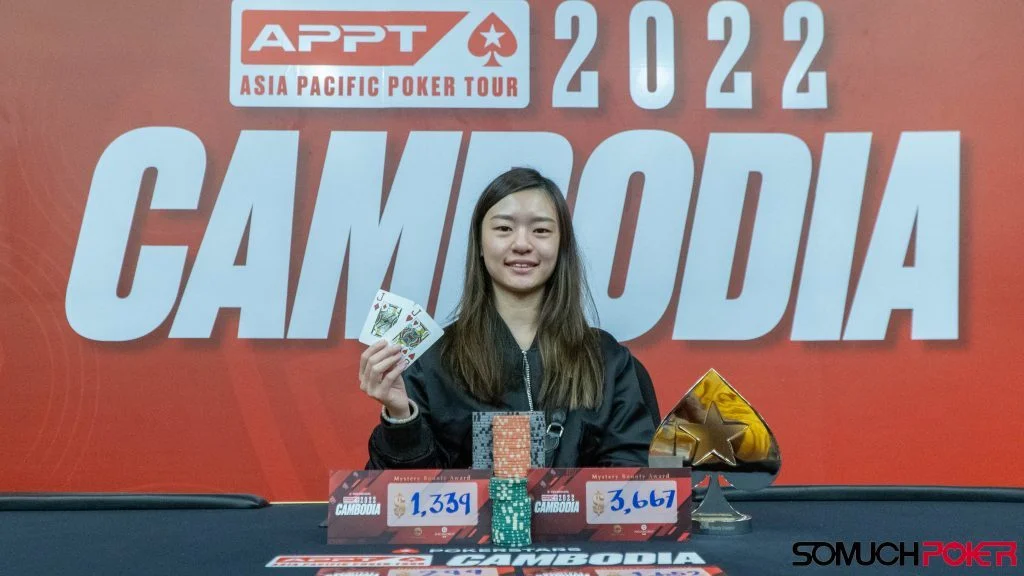
Wrapping up our engaging chat with Maggie, it’s evident that her journey through the world of poker is as vibrant as it is extensive. Having played in an impressive nine countries, from the bustling streets of Taiwan to the coastal beauty of Spain, Maggie’s experiences serve as a testament to the universality of the game and the rich tapestry of stories it can weave.
Until next time, may the cards be ever in your favor.